The state of BC's intercity transit
BC is a vast province. Everything in BC is far from everything else, and usually separated by mountains and water. If you drive, getting around takes ages and can be really dangerous. …but if you don’t drive? Getting around can be downright impossible.

BC is a vast province, stretching from the metropolises of Vancouver and Victoria in the southwest, to the Peace River region in the northeast. Everything in BC is far from everything else, and usually separated by mountains and water. If you drive, getting around takes ages and can be really dangerous.
…but if you don’t drive? Getting around can be downright impossible.
The past.
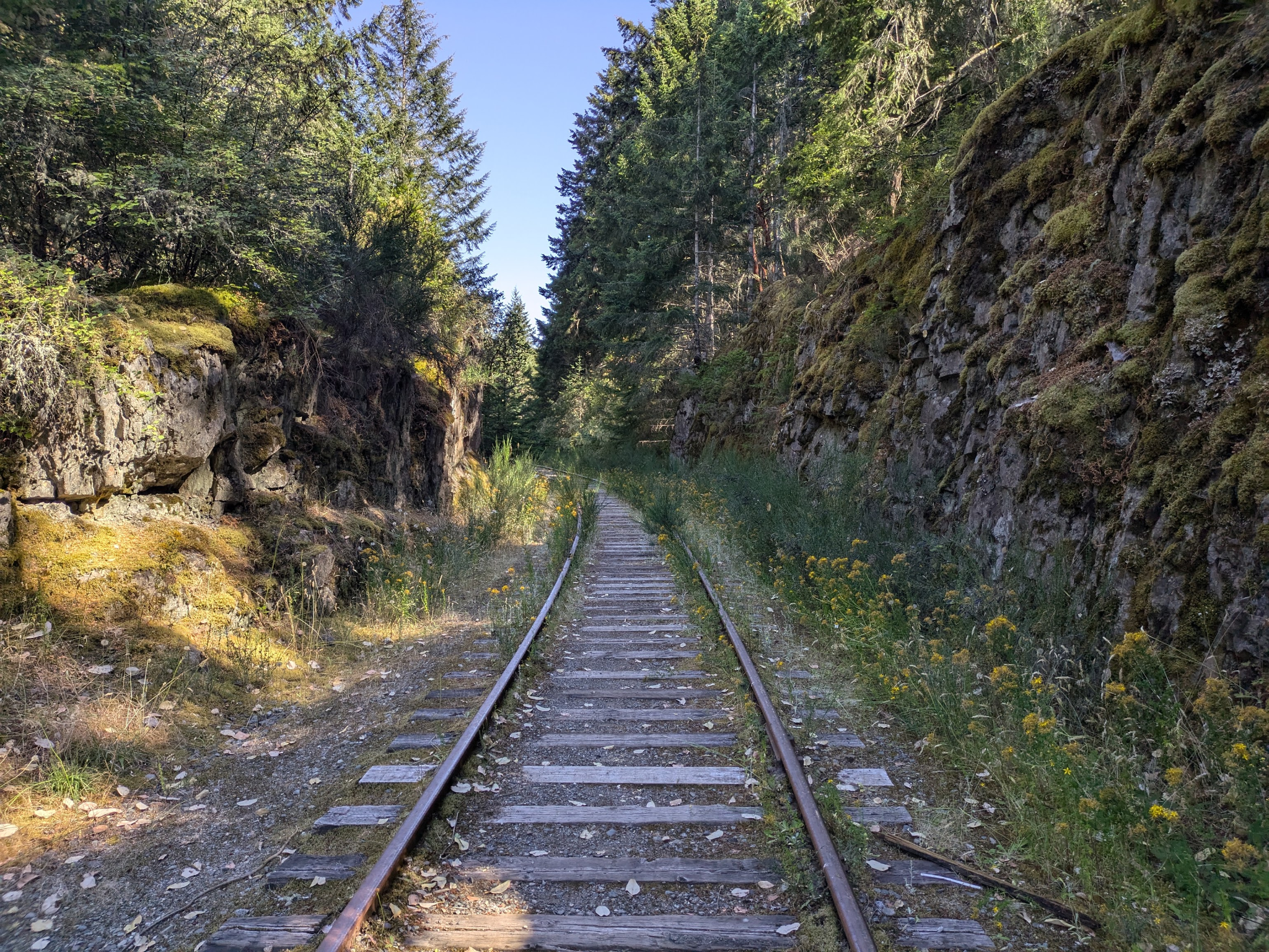
BC has a rich history of intercity travel. The province was built around the passenger rail lines which twisted their way from the east through the mountains to Vancouver. The Canadian Pacific (now CPKC) and Canadian Northern Pacific (now CN) railways spawned Vancouver and the Lower Mainland; the Okanagan sprung up around the Kettle Valley Railway; and the E&N railway on Vancouver Island even helped British Columbia enter confederation!
It wasn’t just a network of trains which built this province, it was also ferries. Many of the early ferries were actually operated by railways to integrate with their respective train networks. Large passenger ferries even operated on the inland lakes, like Okanagan Lake and the Arrow lakes. Among other competitors, rail companies also operated ferries between the Lower Mainland and Vancouver Island.
When the automobile arrived, BC had already grown around its rail-and-sea skeleton. Where rails led, highways followed, and by 1940, British Columbia had its first full east-west highway. With highways came buses. The company which eventually became Greyhound Canada was started in 1921 providing service between Nelson and Willow Point.
Over the years, Greyhound Canada grew and grew, first fighting American Greyhound for the name, then being purchased in 1941. By the 60s, Greyhound was an empire, having acquired many smaller stagecoach companies and operating a well-used, year-round, Canada-wide network.
As the world marched into modernity, it left Greyhound Canada behind, and by the 2010s, the company was shedding customers. This was the start of a decline which ended with Greyhound pulling out of Western Canada in 2018, and eventually Canada altogether in 2021.
Greyhound wasn’t the only intercity transportation organization to betray British Columbians. The federal public railway, VIA Rail, had its budget slashed by Pierre Trudeau in 1981, and again by Brian Mulroney in 1990. Neglect and underinvestment has turned VIA Rail into a shell of the transportation powerhouse it once was. Ultimately, BC lost the Malahat between Victoria and Courtenay in 2011.
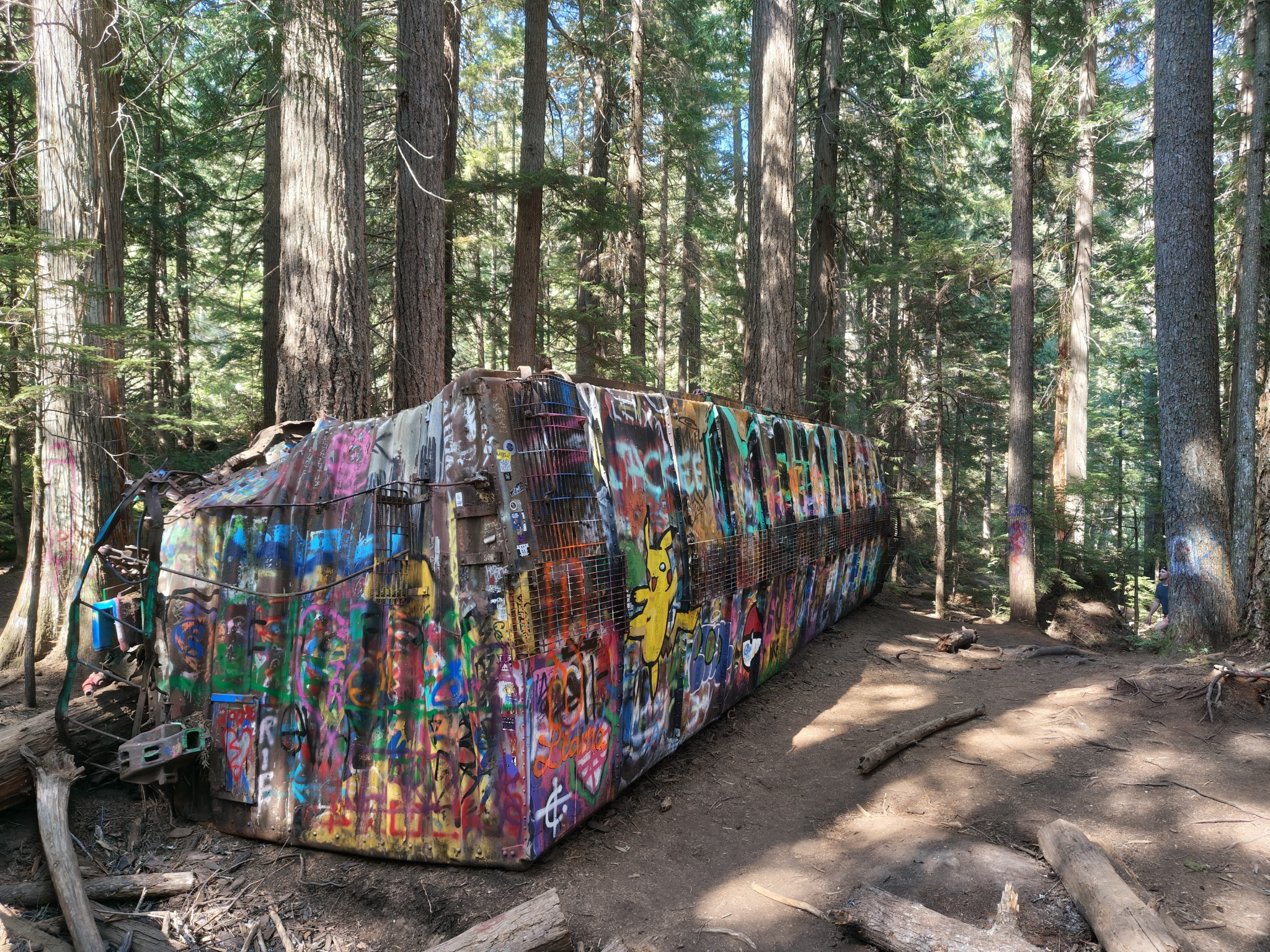
The Province of BC was also keen to dismantle public rail, and against Gordon Campbell’s own promise, it sold off BC Rail to Canadian National amid a corruption scandal for $1bn in 2003. Until 2002, it operated passenger service between Squamish and Prince George. Under CN, passenger service disappeared, and an environmentally disastrous derailment took place.
With CN in charge there was little hope for passenger service returning, but recently CN has initiated the process to abandon the line, which would return it to the provincial government.
In the same year and under the same government, BC Ferries met the same fate when it was turned into a quasi-private company. The province still retains ownership through a complicated three-part ownership structure. Over the years, this has resulted in service cuts and increasingly frustrating capacity problems.
It’s impossible to discuss the history of transportation in BC without acknowledging the harms done to Indigenous peoples. Settler transportation infrastructure was built by cutting through and expropriating Indigenous lands. To make way for it, colonial and provincial governments forcibly relocated Indigenous peoples off their own territories. As time went on, Nations became increasingly isolated and disadvantaged. This isolation presents an ongoing and pressing transportation concern, as Nation residents who cannot drive are left at the mercy of long distances.
The apathy of the provincial and federal governments towards solving these problems has contributed to deaths and disappearances along a stretch of Highway 16 known as the Highway of Tears. Since 1970, as many as 50 people have disappeared or been killed over this stretch of road—a disproportionate number of whom were Indigenous women. Among the many overlapping crises causing this tragedy is a lack of cheap public transportation; many of the victims were last seen hitchhiking, stuck with no other recourse.
The present!
Intercity transportation in BC is a shadow of what it used to be. After decades of public underinvestment and the downfall of private companies, Greyhound pulling out was the last straw in the collapse of intercity transportation in BC.
Private Bus Companies
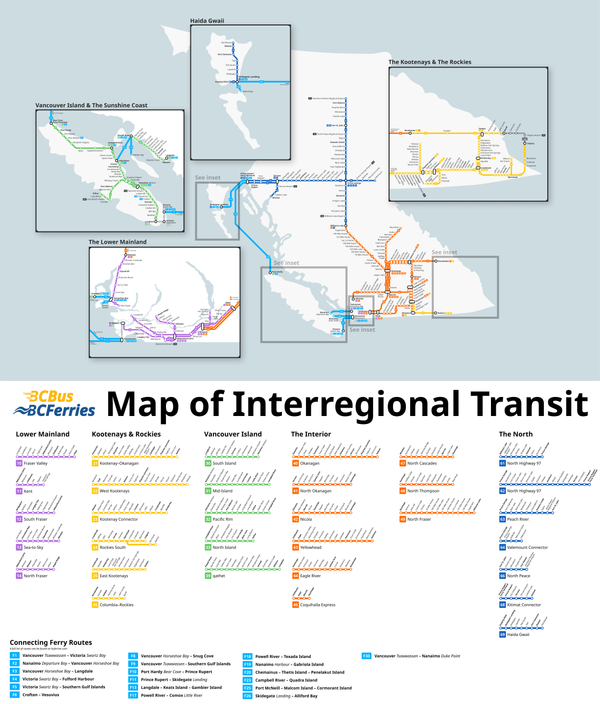
In Greyhound’s wake rose a number of private companies. While they cover many of the same places that Greyhound did, some communities are still left without service. With the collapse of Greyhound also came the collapse of integrated ticketing, timed connections, and a single source of information for intercity travel. While connections between companies are possible, it can only be done through third party sites, and requires separate tickets and sketchy connections.
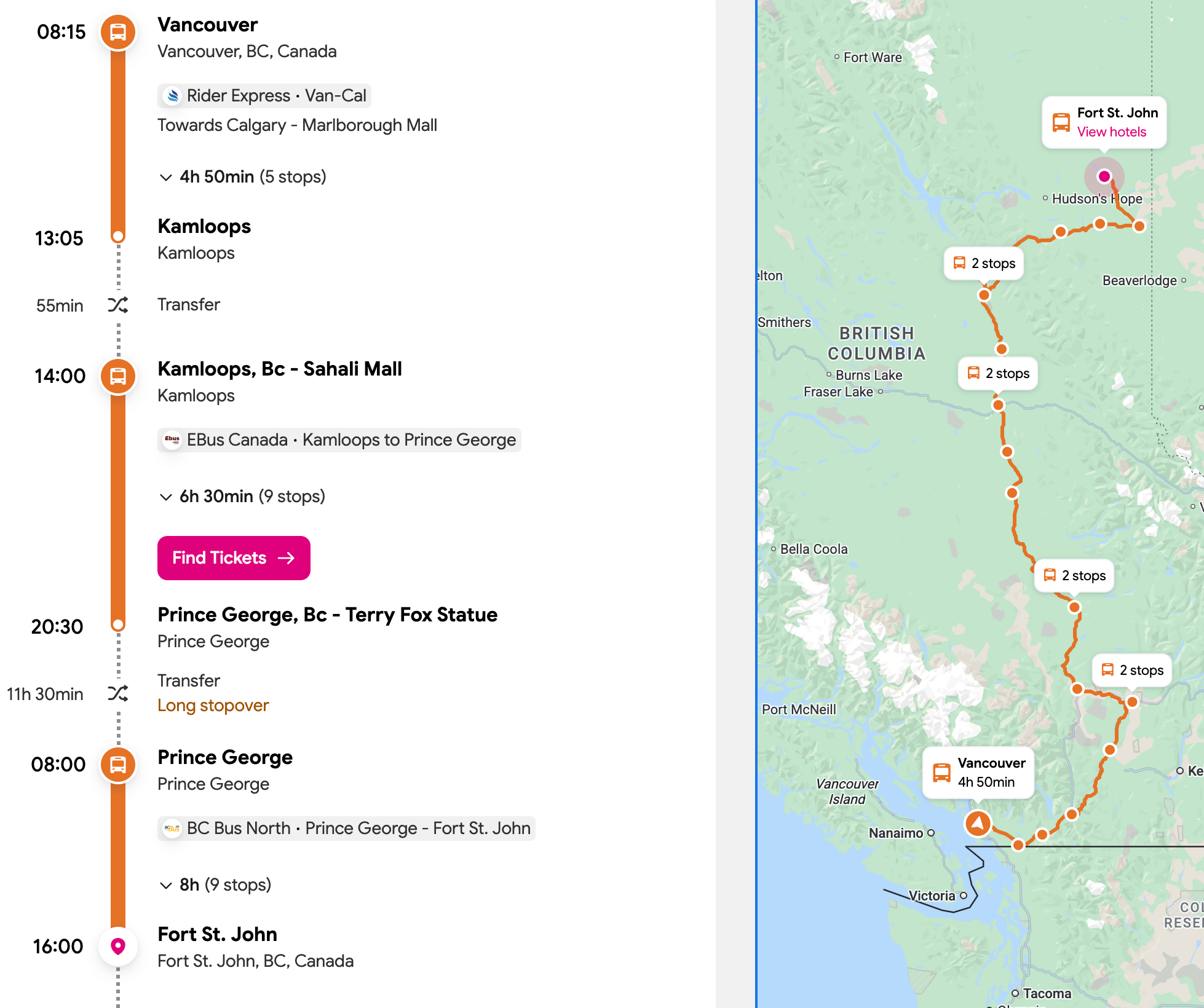
For example, to get from Vancouver to Fort St. John, it requires three tickets for three buses from three different operators, AND an overnight layover in Prince George.
BC’s permitting system precludes competition between operators too: private bus companies are not allowed to operate wherever they want. They must apply for a permit from the Passenger Transportation Board, which has strict stipulations on where and how you can operate service. We will cover the oddities of the Passenger Transportation Board in a future article (stay tuned!), but the gist is that only one company can operate service in a given area.
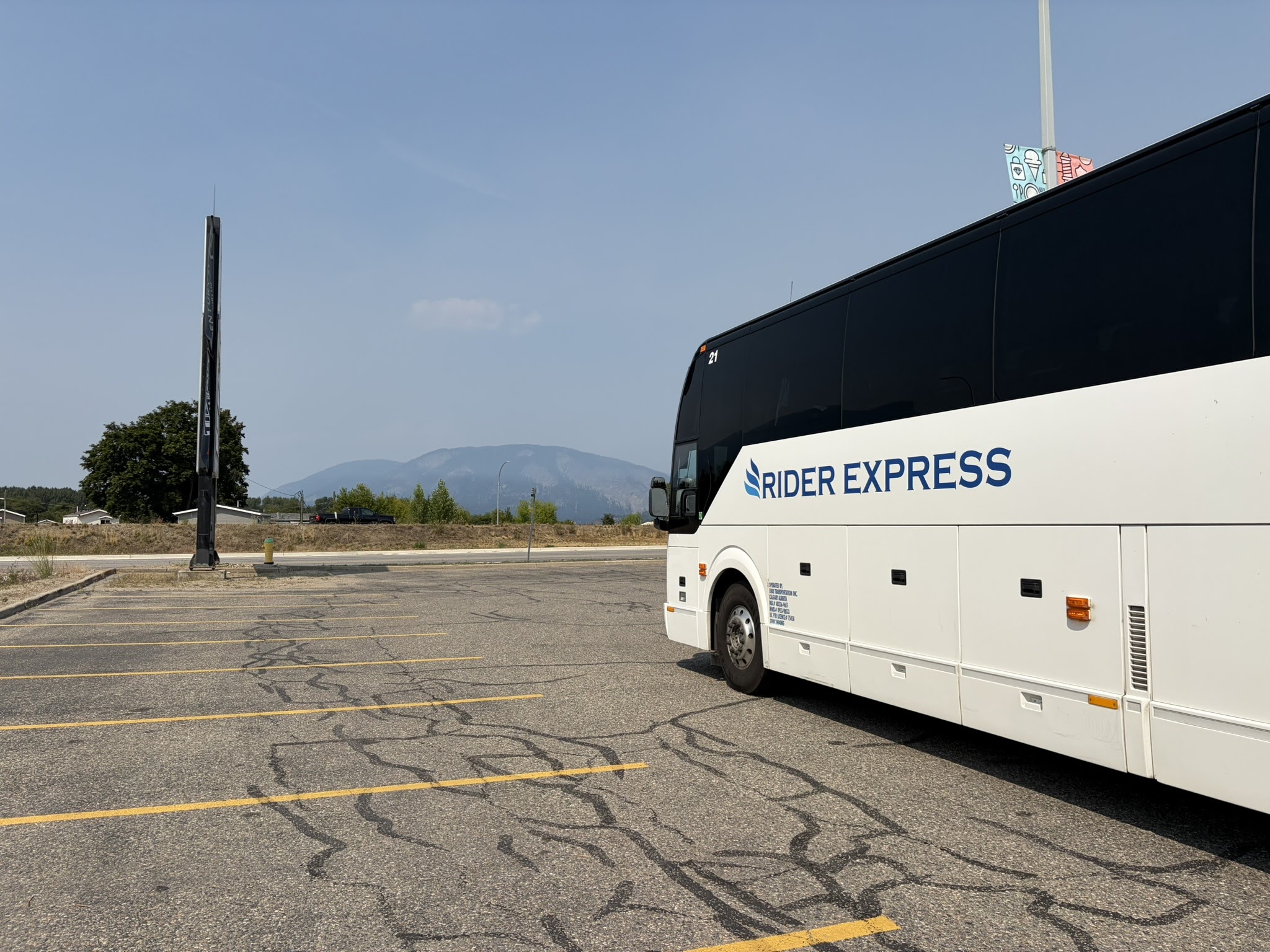
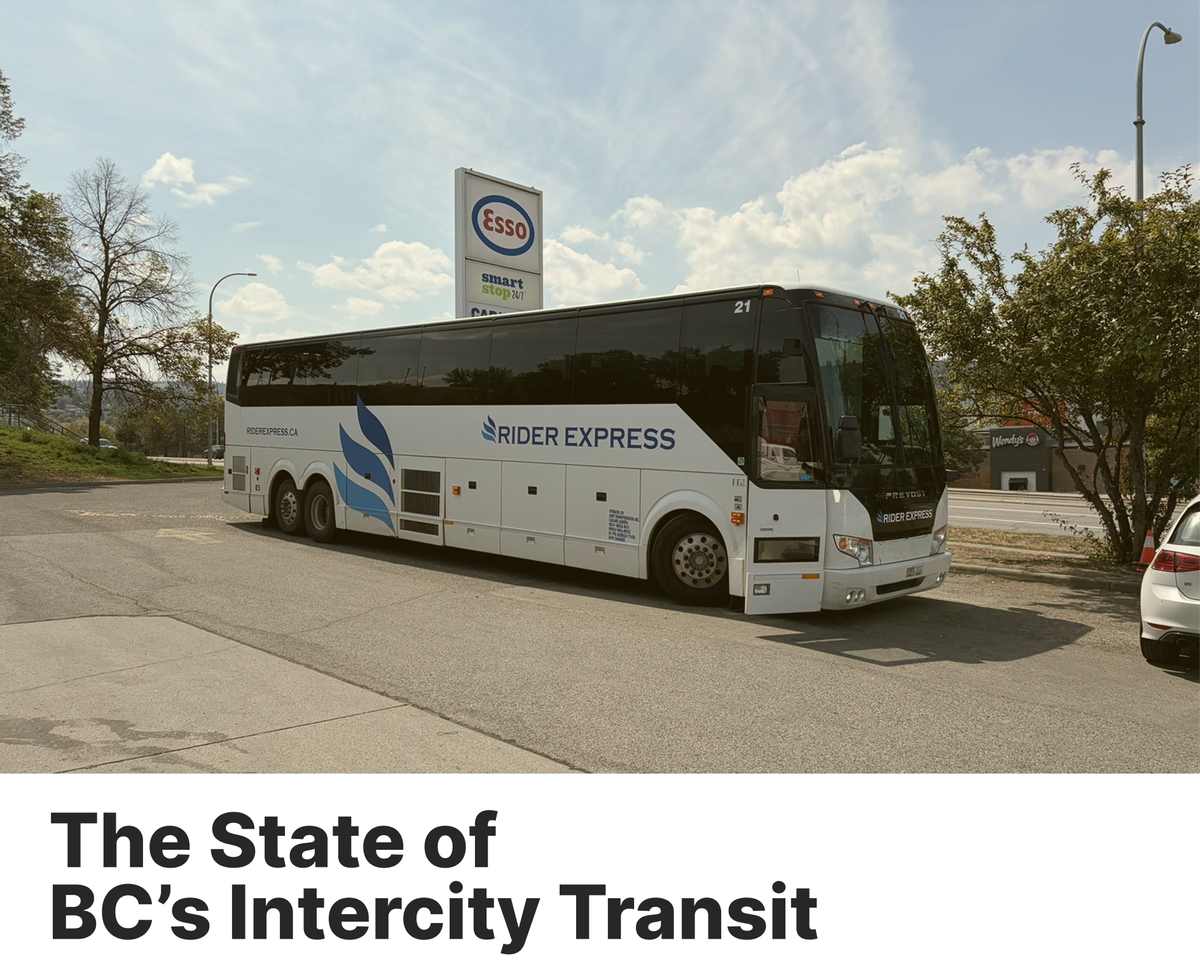
Ebus and Rider Express are the only companies which operate Greyhound-style networks that run across the province. Both companies also run service between Vancouver and Calgary.
Regional bus companies include Island Link, who exclusively serve Vancouver Island; Mountain Man Mike’s in the Kootenays; and BC Bus North up north (more on that later).
Service levels of private companies vary greatly depending on the corridor. Vancouver to Squamish is serviced by a headspinning 150+ trips a week operated by 4 companies, but Kelowna to Nelson only gets 2-4 trips a week operated by a single company.
These companies and services can appear and disappear on a whim. In 2021, Kamloops to Edmonton had a couple trips a week operated by Thompson Valley Charters; now all that remains is a banner atop their website that reads "Pleas Note: We no longer service the highway 5 corridor dedicated route”. The cancellation of such an important service doesn’t even get the attention of a properly spelled notice.
BC Bus North
BC Bus North is BC’s only publicly managed intercity bus service*. After Greyhound pulled out, the province stepped in to offer barebones service on Highway 16 as a public safety measure. It operates four routes, three out of Prince George, and one between Fort Nelson and Fort St. John.
Although the province directly administers this service, it does not directly run any buses. Previously the operator was EBus (which also has its own network), but now it’s Tahltan NST—a charter company owned by the Tahltan Nation.
The province does not plan or advertise BC Bus North as a “public transit” service. Tickets are priced similarly to private companies, frequency is bad, and bus stops are still relegated to gas station parking lots. Since it was launched in 2018, there have been no meaningful improvements to service.
Northern Health Connections
BC Bus North is not actually BC’s only publicly managed intercity bus service. There’s also Northern Health Connections, a division of Northern Health. Although it’s advertised as a “health transportation service”, they nevertheless operate scheduled intercity bus service in Northern BC alongside private operators and BC Bus North.
But… there’s a catch. As a division of a Health Authority, they are only allowed to operate these trips for “medical” reasons. Thankfully, the good folks at Northern Health Connections do their best to accommodate the widest possible range of health reasons, and include health-care workers and students. Most people could book a trip on a Northern Health Connections bus if they get creative.
While they are as accommodating to the general public as they can be, Northern Health Connections’ true purpose is to provide transportation service for people with pressing health concerns, and as such they prioritize those riders.
The service they provide is lifesaving.
Community-run Services
In the absence of government run transit service, some communities have taken to operating service themselves. While not intercity transit, the most successful example of this is the wonderful GERTIE on Gabriola Island. Starting with a yellow school bus named “Thomas” in 2013, the organization has come a long way and recently won a federal grant to purchase new electric buses.
Having started in 2025, Kimta Transportation Society is following the community-run model to operate service between Mackenzie, BC and Prince George. Intercity travel is extremely important for a community’s social health, and these homegrown organizations can be the only providers.
“[...] we’re really improving the quality of life for a certain segment of the population. If they can’t drive, they can get to Prince George to see a specialist, they can see a dentist, they can see an optometrist because none of these things are in Mackenzie. For a certain segment of the population, they were foregoing all of that.”
“We’re helping Mackenzie be less isolated”
- Mark Robillard, president of Kimta Transportation Society
Services like these demonstrate the power of community to solve challenges, but they’re also volatile. Kimta relies on grant applications to operate, something which sucks up limited resources to apply for, and something which can dry up stochastically. Organizations like these rarely appear in transportation aggregators like Google Maps or Rome2Rio, and can be hard for out-of-towners to find or use.
BC Ferries
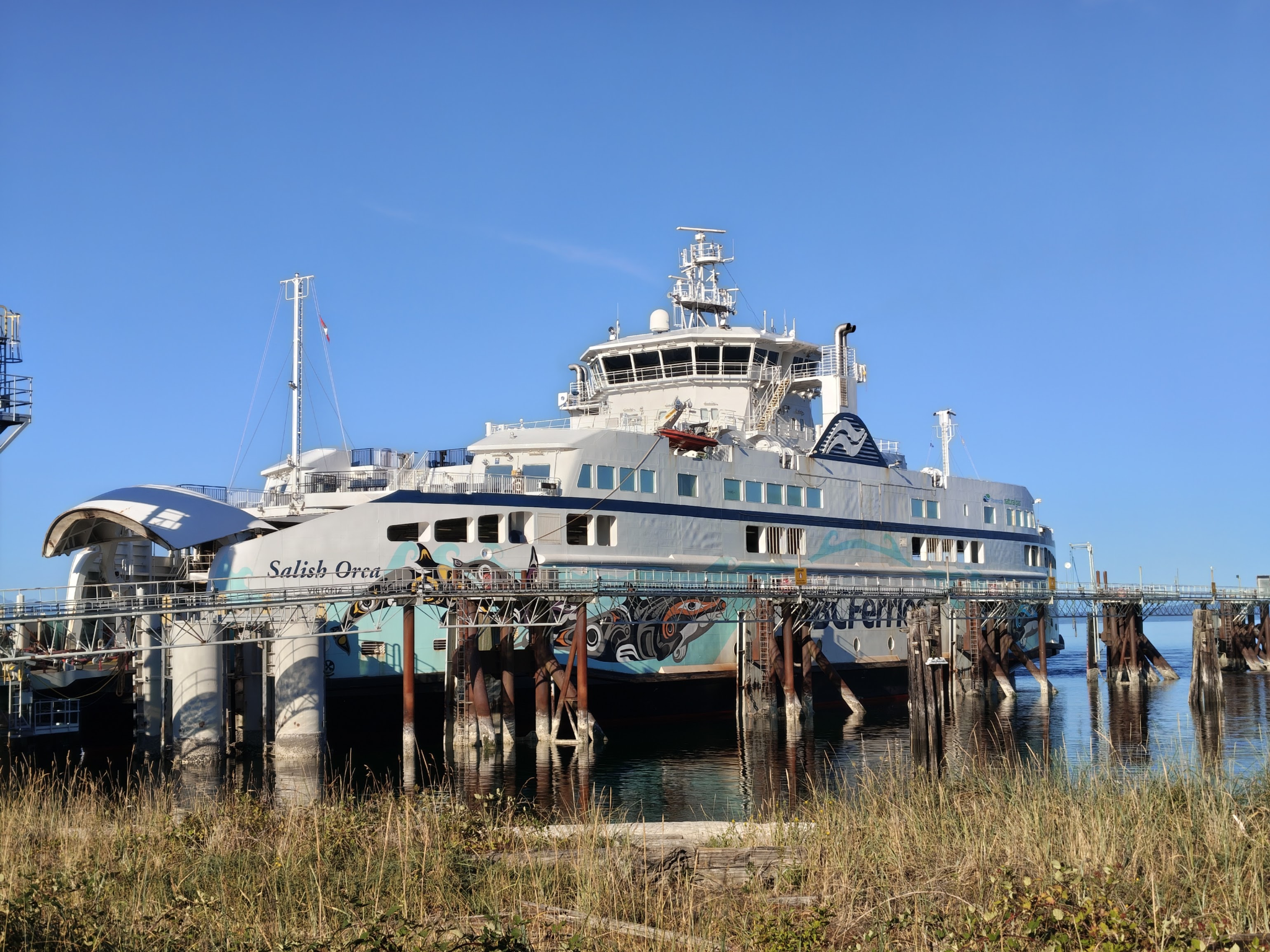
Ferries are critical to how British Columbians get around our province. Love ‘em or hate ‘em, BC Ferries operates the largest coastal ferry system in the world. For coastal and island communities, these ferries are a lifeline, and sometimes the only way to travel.
While there are many ways it could be better, BC Ferries ultimately runs good service. In many places, the ferries integrate with the local bus network, making car-free travel between coastal communities a lot more possible than you might think. But… it’s clear car-free travel is not remotely a priority of BC Ferries.
BC Transit
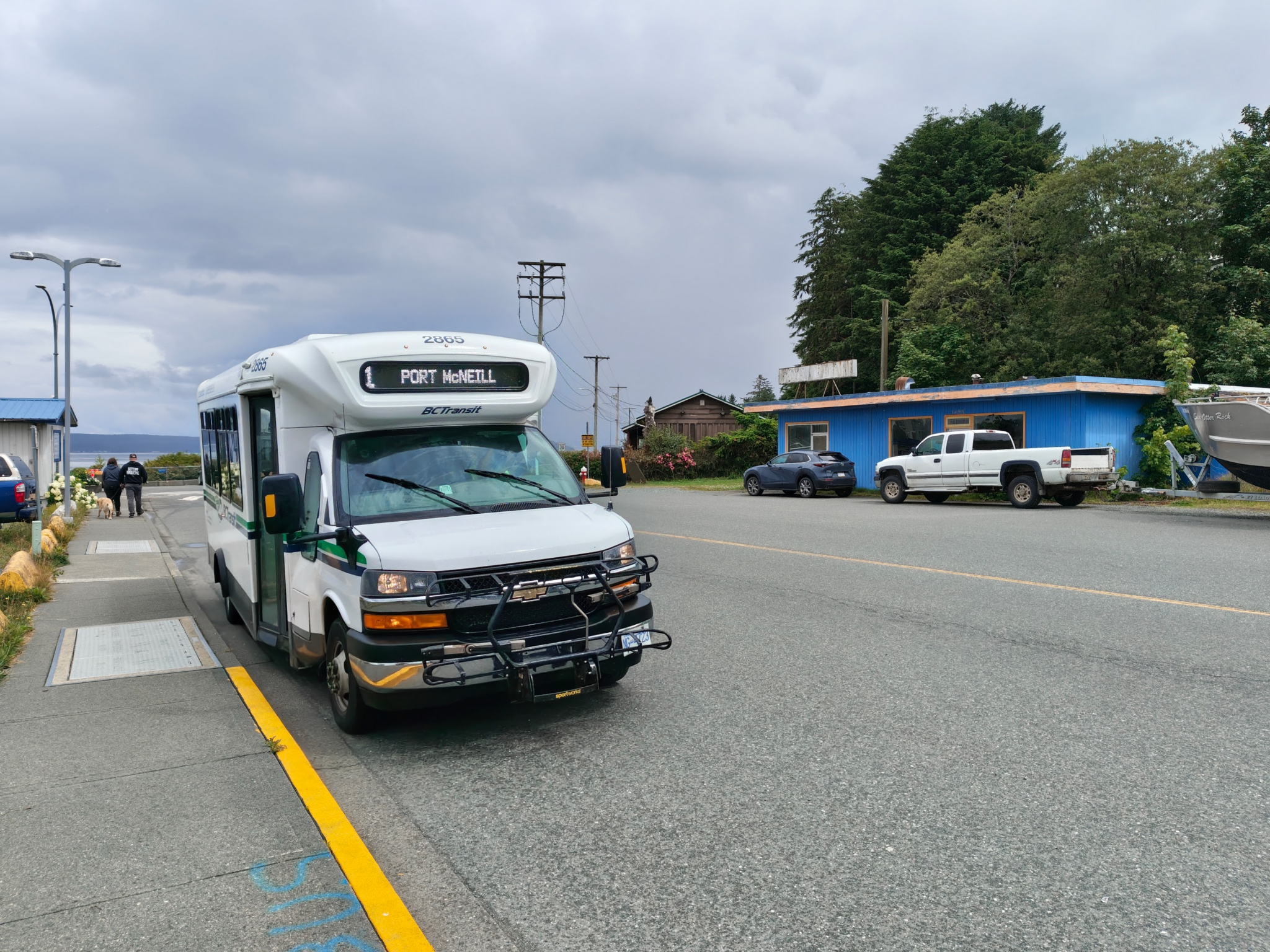
BC Transit is the umbrella transit agency for places outside Metro Vancouver. From Kelowna to Kitimat to Kamloops to Kaleden to Kaslo to Kimberley, BC Transit can be found providing surprisingly good transit service. While their focus is on local and urban transportation, they sometimes also provide regional service between cities. In small communities, these regional bus routes are more common.
Examples of this service include the South Okanagan—Similkameen system’s route 70, which provides a handful of trips between Kelowna and Penticton, or the Clearwater system’s route 10, which makes the 125km drive between Kamloops and Clearwater twice a week. Many of these services are quite new, appearing in the last 5-10 years.
There’s even an entire regional bus network on Highway 16!
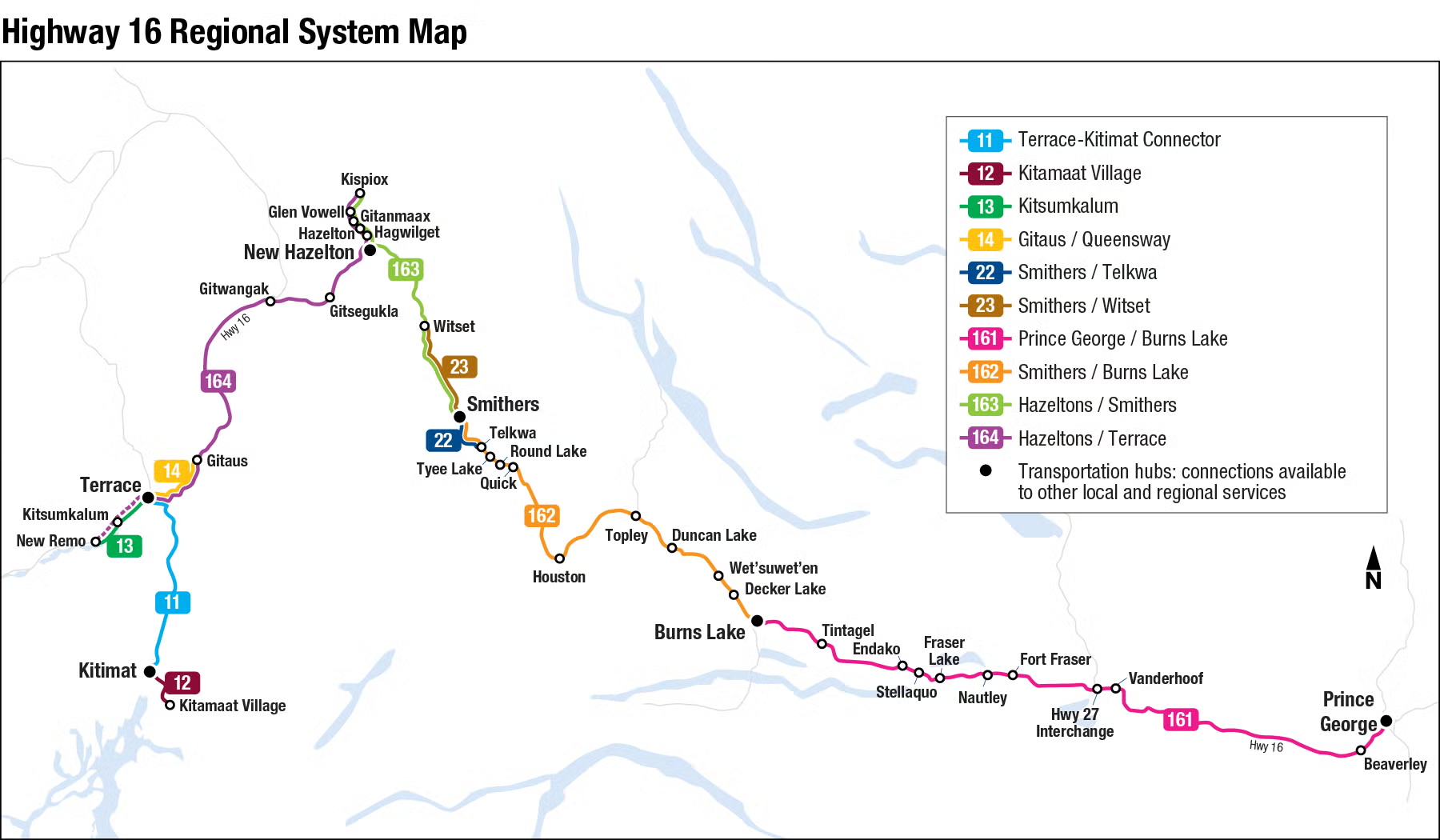
While it’s amazing that many of these routes even exist, service is not nearly as good as they should be. Too many routes run only on a handful of days each week, and there aren’t many with regular all-day service. BC Transit doesn’t have the funding to improve these routes, especially not when competing with service improvements for local routes.
Planes & Trains!
Aside from boats and buses, British Columbia also houses a number of airlines and a public railway.
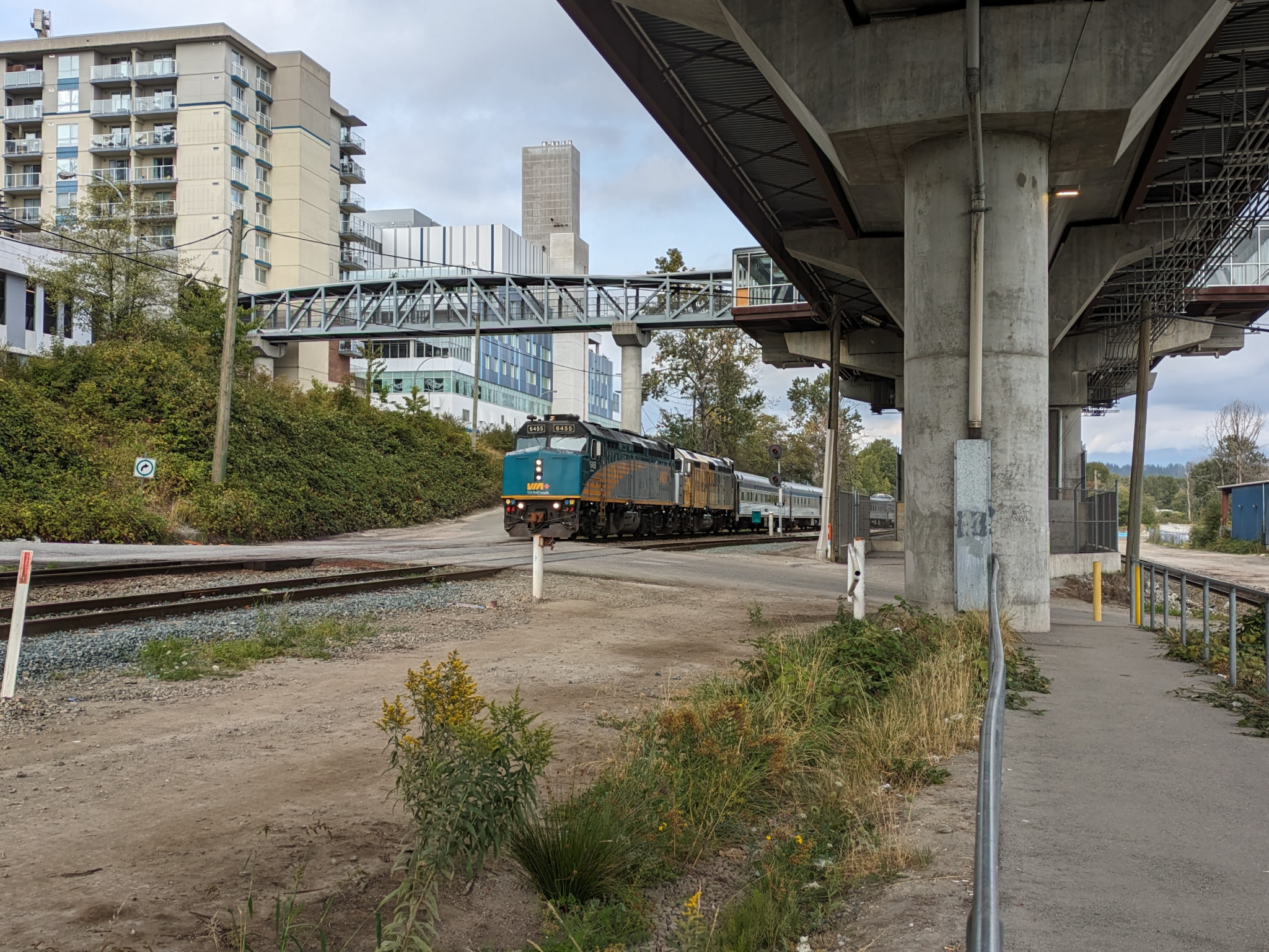
VIA Rail technically provides service in BC through the Canadian and the Skeena. Both of these trains only run twice a week. The Canadian makes a legendary multi-day journey from Toronto to Vancouver and, as such, does not provide great service within BC. It can be useful (and beautiful) for getting to and from the Rockies, but it is pricey. The Jasper-Prince Rupert train is in a similar boat, although it is a lot more useful given that it runs (almost) entirely within BC.
Neither of these services is particularly useful for transportation.
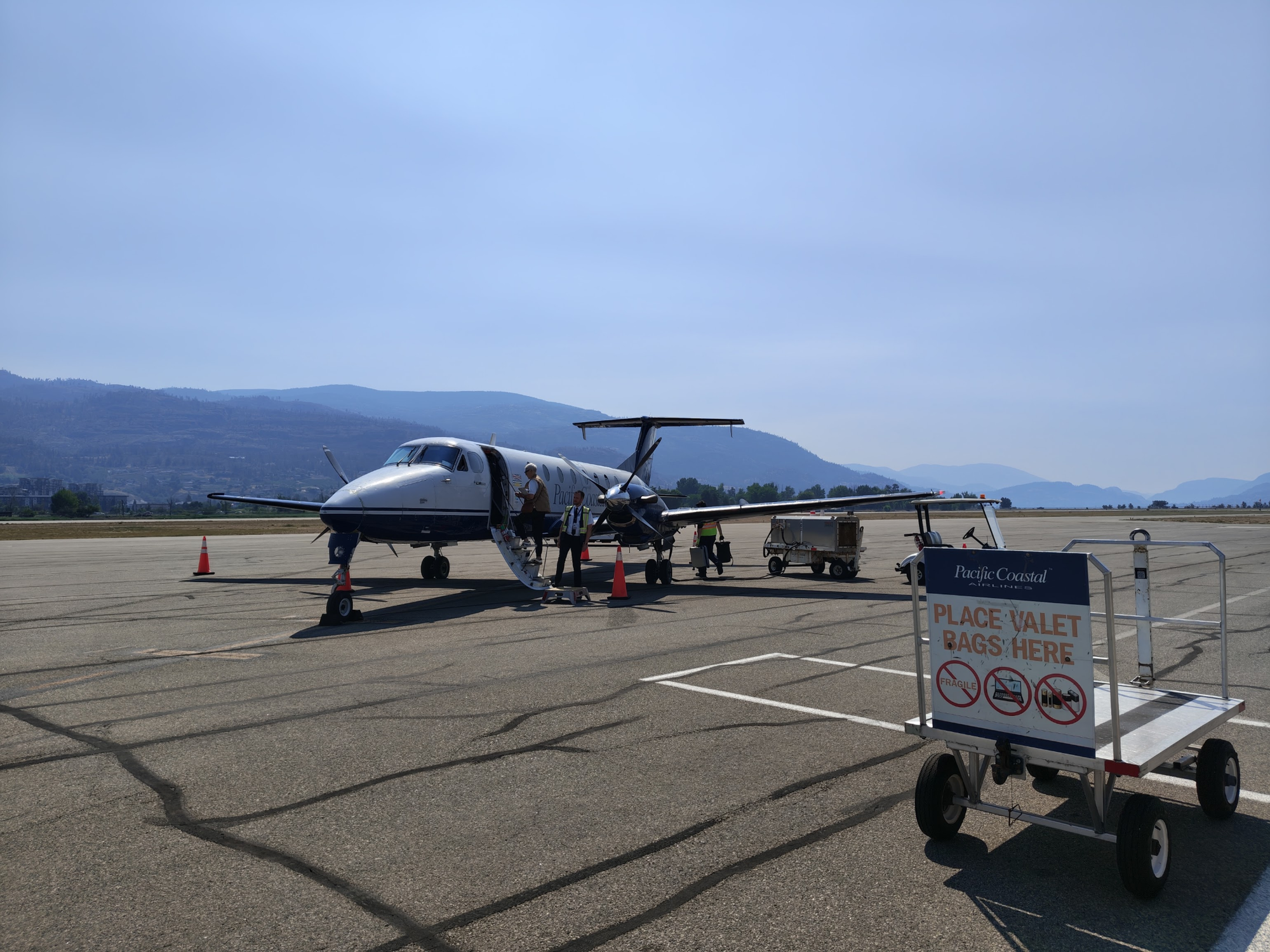
Alongside WestJet and Air Canada, BC is also home to Pacific Coastal Airlines, Central Mountain Air, Air North, Harbour Air (and other seaplane airlines), and Iskwew Air. WestJet and Air Canada fly between major cities and larger regional hubs. With its fleet of small planes, Pacific Coastal Airlines provides lifeline air service to smaller communities like Trail and Port Hardy. In case it needed to be said, flying is expensive and bad for the environment.
The future?
Despite growing frustration and election promises, expanding intercity travel options does not seem to be a priority for the province.
The Public Transit Alliance of BC are trying to change that! Sign up for our newsletter to stay informed on what we’re up to.
Acknowledgements
Photos by me (Abby Ivison) except where noted.
Special thanks to Emma Victoria Byron for the image used in the cover photo, and James Ward for being such an amazing friend to explore and photograph BC with.